Clarivate's 2021 list of Highly Cited Researchers recognizes scientists whose papers rank in the top 1% of citations in the field and in Web of Science. Three of the top ten highly-cited scientists at UC Davis are members of the Genome Center. We congratulate Siobhan Brady, Jonathan Eisen, and Oliver Fiehn for their contributions and dedication to their respective fields.
A recent publication in Scientific Reports by Brydges et al. titled "Indoxyl sulfate, a gut microbiome-derived uremic toxin, is associated with psychic anxiety and its functional magnetic resonance imaging-based neurologic signature" investigated whether indoles in the gut microbiome are associated with depression and anxiety. The study found that abundance of indoles is correlated with anxiety, but anxiety treatment was not related to the modulation of indoles in the gut.
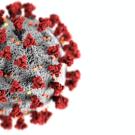
UC Davis’s asymptomatic COVID-19 testing program completed its one millionth test this week, a little more than a year since the campus began offering tests to on-campus students, faculty and staff in mid-September 2020.
“Our asymptomatic testing program was the original foundation of the university’s COVID-19 strategy and, along with vaccination, continues to be central to our mitigation efforts,” said Provost and Executive Vice Chancellor Mary Croughan.
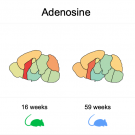
The first atlas of metabolites in the mouse brain has been published by a team led by UC Davis researchers. The dataset includes 1,547 different molecules across 10 brain regions in male and female laboratory mice from adolescence through adulthood and into advanced old age. The work is published Oct. 15 in the Nature Communications. The complete dataset is publicly available at https://mouse.atlas.metabolomics.us/.
This program is designed to support highly innovative, transformative research.
The National Institutes of Health (NIH) today announced the award of 106 grants to support highly innovative and broadly impactful biomedical or behavioral research via the High-Risk, High-Reward Research program, which funds highly innovative proposals that may struggle in traditional peer-reviewed grants due to the high risk of the proposal.
The Delta variant is driving a surge in hospital admissions and straining ICUs around the world. Under such conditions, accurately anticipating demand for hospital resources can mean the difference between timely treatment and, in some cases, between life and death. When and how are COVID-related admissions rates likely to change, and by how much? And how far in advance can we make such predictions accurately?
A recent publication in Med by Mysore et al. titled "Protective heterologous T cell immunity in COVID-19 induced by the trivalent MMR and Tdap vaccine antigens" found that T cell responses to SARS-CoV-2, MMR, and Tdap vaccine proteins are highly correlated. This indicates that those with prior MMR or Tdap vaccination may have reduced COVID-19 severity.
The Hispanic Association of Colleges and Universities (HACU) selected Luis Carvajal-Carmona as a fellow for the third cohort of the Presidential Leadership Academy. The prestigious one-year HACU program is designed to prepare the next generation of culturally diverse leaders for executive and senior-level positions in higher education.
The Office of the Vice Chancellor for Diversity, Equity and Inclusion, through the ADVANCE Program and its Center for the Advancement of Multicultural Perspectives on Science (CAMPOS) announced Luis Carvajal-Carmona as one of the 2021 ADVANCE Scholar Award recipients.
UC Davis joined one other institution, the University of Illinois at Urbana-Champaign, as the inaugural winners of the APLU Research Response to a Community in Crisis Award, announced Thursday (July 1).
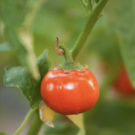
The NSF BIO Newsletter this month featured Kajala et al.'s research on how findings on root cell development will increase the likelihood of growing food under drought conditions. The article featured, titled Innovation, conservation, and repurposing of gene function in root cell type development published in Cell, investigated the translatomes of tomato root cell types.
Congratulations to the West Coast Metabolomics Center for collaboration with Thermo Fisher Scientific in the formation of the Center for Excellence in Clinical Metabolomics.
The Telomere to Telomere (T2T) consortium, including Megan Dennis from the Genome Center, has published a pre-print of the assembly of the complete human genome. This pre-print publishes the sequence of the remaining 8% of the genome and is the first truly complete 3.055 billion base pair (bp) sequence of a human genome. This is the largest improvement to the human reference genome since its initial release in 2001.
Congratulations to Luis Carvajal-Carmona on being awarded a 2021 Chancellor's Award for Mentoring Undergraduate Research in the Faculty Category. Many of Dr. Carvajal-Carmona's mentees have been first-generation Latina and under-represented minority students. Read more about the award and awardees here.