Jonathan Eisen and his collaborators have been busy this year with several exciting research and community efforts.
A new paper, in collaboration with the labs of Jay Stachowicz and Maggie Sogin, explores microbial communities and their roles in marine ecosystems. This work highlights the power of interdisciplinary collaboration to better understand the diversity and function of microorganisms. Read the paper
Researchers at UC Riverside, working with UC Davis Proteomics and Metabolomics Cores, found that while most mice gained weight on a high-fat, soybean-oil–rich diet, genetically engineered mice did not. These mice produced a modified liver protein that regulates genes involved in fat metabolism and alters how the body processes linoleic acid. The findings, published in the Journal of Lipid Research, may help explain why some individuals are more prone to weight gain from soybean-oil–rich diets than others.
What makes the human brain distinctive? A new study published July 21 in Cell identifies two genes linked to human brain features and provides a road map to discover many more. The research could lead to insights into the functioning and evolution of the human brain, as well as the roots of language disorders and autism.
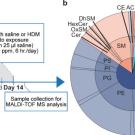
Nathanial Chase Stevens, PhD, and our team here at West Coast Metabolomics Center UCDavis published in nature communications: "Resolving multi-image spatial lipidomic responses to inhaled toxicants by machine learning"
The Proteomics Core's GC Symposium video "Omics Family Therapy" made a comeback after it's loss at the symposium this year and won the US HUPO (Human Proteome organization) Video contest at US HUPO'S most recent conference in Philadelphia last month
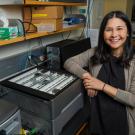
Megan Dennis, an associate professor in Biochemistry and Molecular Medicine at UC Davis Health, has been awarded the 2024 Chancellor’s Fellowship. This prestigious honor, given to early-career faculty members, includes a $25,000 grant for research, teaching, or service activities. Dennis, who joined UC Davis in 2015, has become a leader in studying the genetic factors affecting the brain, particularly in conditions like autism. Her research aims to identify hidden genetic changes linked to diseases, improving diagnoses and treatments.
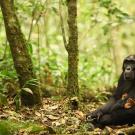
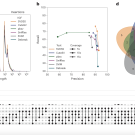
Researchers at the Genome Center have contributed to a groundbreaking study published in Science, revealing that chimpanzees possess genetic adaptations enabling them to thrive in diverse habitats, including forests and savannahs. Notably, the study identifies genetic variants in chimpanzees that may confer resistance to malaria, similar to protective mechanisms observed in humans.
Co-authored publications by UC Davis Genome Center Members or publications where UC Davis Genome Center or a GC Core is acknowledged for their technical support and services:
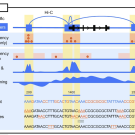
A paper titled, "Dr.Nod: computational framework for discovery of regulatory non-coding drivers in tissue-matched distal regulatory elements" by Tomkova et al. 2023 was recently published in Nucleic Acid Research.
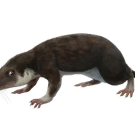
Every modern mammal, from a platypus to a blue whale, is descended from a common ancestor that lived about 180 million years ago. We don’t know a great deal about this animal, but the organization of its genome has now been computationally reconstructed by an international team of researchers. The work is published Sept. 30 in Proceedings of the National Academy of Sciences.
This post summarizes the findings of the paper "Effects of pairing on color change and central gene expression in lined seahorses" by Mederos et al. published in Genes, Brain and Behavior (link).
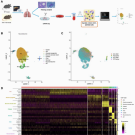
A recent publication in MDPI Genes by Zhu et al. titled "Single-cell RNA-seq analysis reveals lung epithelial cell type-specific responses to HDM and regulation by Tet1" investigated house dust mite (HDM)-induced lung inflammation in mice using Tet1 knockout mice and wildtype mice.
Studies comparing animal genomes generally focus on the DNA sequence itself. A new study by researchers at the University of California, Davis shows how the three-dimensional scaffolding of chromosomes is related across several species of carnivores, offering a new approach of “comparative scaffotyping” that could be used to identify related genes across species and place them in context. The work, published the week of Feb.