Register now for the free conference Biodiversity Genomics 2022: Sequencing Genomes All Around The World, which will be held online from October 3-7. The deadline for submitting abstracts is July 31, 2022.
The Biodiversity Genomics conference is hosted by the Earth BioGenome Project, which aims to sequence all of the eukaryotic organisms on Earth in 10 years.
UC Davis' COVID-19 testing center is now open in the Human Resources Administration Building on Blue Ridge Road. Testing is opening on Sunday through Thursday from 8:30 am until 4:30 pm. COVID testing on campus is currently voluntary and is only available to students and employees. Appointments are required and can be made online at Health-e-Messaging. Those testing positive are still required to notify the university and isolate following public health guidelines.
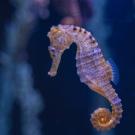
This post summarizes the findings of the paper "Effects of pairing on color change and central gene expression in lined seahorses" by Mederos et al. published in Genes, Brain and Behavior (link).
Pam Ronald, of the Genome Center and College of Biological Sciences, was recently featured on 'Face to Face' with Chancellor May. They discussed Ronald's 30-year career in plant pathology and her recent awards, including the Wolf Prize. Watch the full interview below.
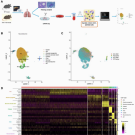
A recent publication in MDPI Genes by Zhu et al. titled "Single-cell RNA-seq analysis reveals lung epithelial cell type-specific responses to HDM and regulation by Tet1" investigated house dust mite (HDM)-induced lung inflammation in mice using Tet1 knockout mice and wildtype mice.
Dr. Luis Carvajal-Carmona will be among the presenters featured during the 2022 ADVANCE Award Symposium tomorrow Saturday, May 21, 2022. The symposium begins at 9 am with a breakfast and registration, with featured presentations at 9 am by Diane M. Beckles, 11 am by Chen-Nee Chuah, and 2:15 pm by Luis Carvajal-Carmona.
Christina Kim was recently named one of 15 Searle Scholars for 2022. The Searle Scholars Program supports recently appointed assistant professors or those in a tenure-track appointment to conduct high risk, high reward research in chemistry and the biomedical sciences. The funds awarded with the recognition will help to support Kim's research for the next three years.
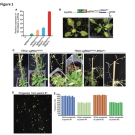
A recent publication in Plant Physiology by Nagalakshmi et al. (2002) titled "High-efficiency multiplex biallelic heritable editing in Arabidopsis using an RNA virus" described the rapid adoption of genome editing technology for gene function studies in plants. Instead of the common use of Agrobacterium-mediated transformation, the authors detail new optimization of a Tobacco rattle virus-based vector for the delivery of single-guide RNAs. This allows for efficient multiplexing of somatic and biallelic editing in a single generation.
Each year, the Academic Senate and Academic Federation announce awards for research, teaching and mentoring, and public service. A total of 14 UC Davis Academic Senate and Academic Federation members were awarded for their excellence. Three of the 14 awards went to Genome Center members.
The African BioGenome Project (AfricaBP) has published a position paper in Nature highlighting the goals, priorities, and roadmap of the Africa-led effort to sequence the genomes of 105,000 species of plants, animals, fungi and protists that are endemic to the continent.