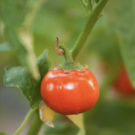
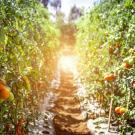
The NSF BIO Newsletter this month featured Kajala et al.'s research on how findings on root cell development will increase the likelihood of growing food under drought conditions. The article featured, titled Innovation, conservation, and repurposing of gene function in root cell type development published in Cell, investigated the translatomes of tomato root cell types.
Congratulations to the West Coast Metabolomics Center for collaboration with Thermo Fisher Scientific in the formation of the Center for Excellence in Clinical Metabolomics.
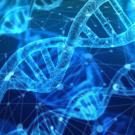
The Telomere to Telomere (T2T) consortium, including Megan Dennis from the Genome Center, has published a pre-print of the assembly of the complete human genome. This pre-print publishes the sequence of the remaining 8% of the genome and is the first truly complete 3.055 billion base pair (bp) sequence of a human genome. This is the largest improvement to the human reference genome since its initial release in 2001.
Congratulations to Luis Carvajal-Carmona on being awarded a 2021 Chancellor's Award for Mentoring Undergraduate Research in the Faculty Category. Many of Dr. Carvajal-Carmona's mentees have been first-generation Latina and under-represented minority students. Read more about the award and awardees here.
University of California scientists have discovered genetic data that will help food crops like tomatoes and rice survive longer, more intense periods of drought on our warming planet.
Over the course of the last decade, the research team sought to create a molecular atlas of crop roots, where plants first detect the effects of drought and other environmental threats. In so doing, they uncovered genes that scientists can use to protect the plants from these stresses.
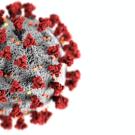
Despite the development of vaccines and fast testing methods, SARS-CoV-2 continues to mutate and pose threats to our community. According to a recent news release by Healthy Davis Together, the P.1 variant of the virus has been identified in Yolo County.
The Vertebrate Genomes Project (VGP) today (April 28) announced their flagship study including high-quality, near error-free, and near complete reference genome assemblies for 16 species representing six major lineages of vertebrates, including mammals, reptiles, monotremes, amphibians and fish.
The David L. Weaver Endowed Lecture Series in Biophysics and Computational Biology is dedicated to the memory of David L. Weaver, a prominent biophysics researcher and professor at Tufts University.
Thank you to Dr. Eva Nogales for an insightful presentation for the 2021 David L. Weaver Endowed Lecture. You can watch Dr. Nogales' full presentation here. Note that it is necessary to log into your Zoom account to view the recording.
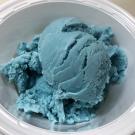
Blue coloring in nature is difficult to find; however, there is consumer demand for natural food coloring. Research conducted by Denish et al. (2021) in Science Advances describes the discovery of a cyan blue anthocyanin-based colorant. Synthetic biology and computational protein design tools were leveraged to develop an enzymatic transformation of red cabbage anthocyanins into the desired anthocyanin. This newly discovered cyan blue colorant could replace FD&C Blue No. 1.